Building a massage practice from the ground up is no small feat. Growing one into a thriving clinic with 17+ massage therapists is a whole other level of grit, consistency and strategy. At Spamarketing.com we have had the privilege of supporting ambitious practitioners on that journey, including Arissa, who scaled an already-successful Sherwood Park, Alberta practice into a multi-therapist clinic that generates around $1.4 million a year.
This post pulls back the curtain on the core pillars of growth we implemented with Arissa. The full numbers are in the Arissa case study; here we focus on the decisions that any massage therapist ready to scale can borrow.
The hard truth: growth is not easy
This is not an overnight success story. Arissa did not get lucky or go viral. She showed up early, stayed late, and made difficult decisions about hiring, marketing and reinvesting in her business. There were months of full calendars and months of last-minute cancellations. Through it all the focus stayed the same: build a business, not just a job.
Growing to a 17-therapist team takes more than massage skills. It takes leadership, systems and relentless marketing.
1. Hiring strategically, not desperately
As demand grew, the first temptation was to bring in help fast. But hiring the right therapists, not just anyone with a licence, is essential to protect your brand and culture. We worked with Arissa to:
- Define the ideal therapist profile before posting a single ad: modalities, availability, and how they treat clients between appointments, not just on the table.
- Tie hiring pace to booked-appointment volume. A new therapist started when demand was already there, so their column filled in weeks instead of months.
- Build an onboarding path that protects rebooking rates, so a new hire does not quietly lose the clients the marketing paid for.
2. Systems before scale
Every new therapist multiplies the admin: confirmations, rescheduling, follow-ups, reviews. Before Arissa added her fifth chair, we moved booking, screening and reminders off her plate entirely. Every lead is answered by a live setter within five seconds, safety-screened, and booked straight into the clinic’s calendar, so a full schedule never meant a full inbox for the owner.
The same applied to retention. Follow-up across email, SMS, social and direct mail runs on a system, not on whoever remembers. That is what turns a first visit into a regular client, and regulars are what make a clinic of this size stable through slow seasons.
3. Marketing that compounds
Local Google and Meta campaigns, with the ad costs covered by us, produce a steady flow of new massage clients every month. To date we have converted thousands of leads into paying customers at Arissa’s clinic. The compounding part is that every new client also enters the retention system, so the base of regulars grows every month rather than resetting.
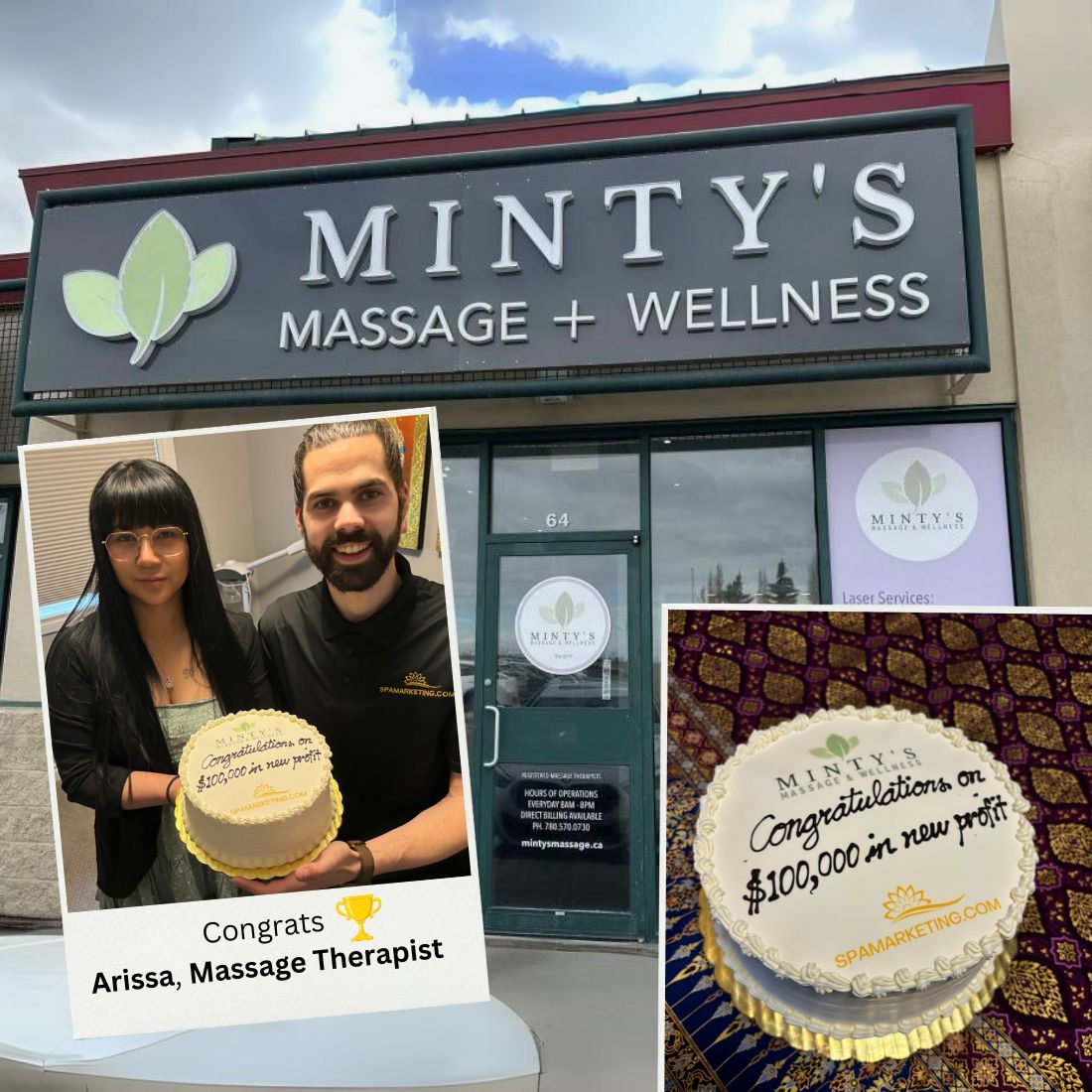
$100,000 in new profit — RMT Arissa, Sherwood Park AB, as reported on our reviews page.
4. Leadership: owning the clinic, not the marketing
Arissa did not become a massage therapist to run ad campaigns, do bookkeeping, negotiate a lease and promote herself. She got into massage for one reason: to support her daughter. Handing the marketing and booking to a partner gave her back the time to lead the team, keep quality high and decide when to grow next.
What is replicable
- Grow demand before you grow headcount.
- Answer every lead in seconds, even when every therapist is on the table.
- Measure rebooking and lifetime value, not just new clients.
- Let someone else own the marketing so the owner can own the clinic.
Read the full story, with the numbers, in the Arissa case study, or see what we do for multi-therapist clinics.